
Pastoral Candidate Ben Daniel discusses his call to MPC and how it relates to the journey of the wise men: likely full of surprises, mistakes, grace, and a continuing quest for the holy without complacency.
Podcast: Play in new window | Download

Sunday, January 5th, 2014
Pastoral Candidate Ben Daniel discusses his call to MPC and how it relates to the journey of the wise men: likely full of surprises, mistakes, grace, and a continuing quest for the holy without complacency.
Podcast: Play in new window | Download
Sunday, January 5th, 2014
Traditional African-American spiritual
Performed by the MPC Family Choir
Podcast (music-samples): Play in new window | Download
Monday, December 23rd, 2013
 Plan now to attend our child-centered Christmas Eve Service on Tuesday, December 24th at 5:30 p.m. We will build the Christmas creche, sing carols by candlelight and enjoy hot cider and treats following the service. Perfect for all ages and all are truly welcome!
Saturday, December 14th, 2013
 The golden moments in the stream of life rush past us and we see nothing but sand; the angels come to visit us, and we only know them when they are gone. ~George Elliot
‘Tis the season for angels, angels, angels! We sing songs about angels, read stories about angels, we make angels in the snow, and of course, we put angel images everywhere. On cookies, in frames, frozen in sculpture, molded in chocolate, and then we even impale them on decorated trees.
Most of the angel images are of the sweet cherub variety – angels in the guise of small children. And most of the angels disguised as humans I have met have been under the age of seven. (of course I have met quite a few “devils” in this age group too) These cute little angels are messengers that call us back to play and make believe. They bring us tidings of unconditional love. They break our hearts when they are sad or hurt because they love so purely.
Biblical angels are a different matter altogether. When an angel shows up in a text, I often ask the congregation, “now what is the first thing an angel says?” Folks then call out: “behold” or “lo”, but actually the first thing a Biblical angel usually says is “fear not”. When the angels visit the shepherds on Christmas Eve, listen for this language about fear.
Fear not, indeed. In Tony Kushner’s brilliant play, “Angels in America”, the angel, played by the brilliant Emma Thompson, is terrifying, enthralling, mysterious, and sexy. The message of this angel is hard to decipher and can only be understood in the context of the struggle of Prior Walter to live and finally die with AIDS. S/he (angels are usually depicted as being quite androgynous) appears in supernatural visions and then in the guise of a wise nurse, a homeless woman, and more enigmatically as a real estate agent. The message of the voice/angel in this play is to tell Prior Walter that he is a prophet: that his life has meaning and how he lives with this plague matters. Prior, by conquering his fear of the angel (and God) will then be able to speak prophetic words of life in the midst of death.
I believe that angels – messengers of God – are hovering all about us. This is not a particularly “woo woo” sort of belief, nor do I think that we are surrounded by all sorts of strange spiritual beings. And I am particularly not interested in long discussions of fallen angels, angel armies, guardian angels, or the various hierarchies of angels in heaven and hell. Instead, I believe that bits and pieces of divine wisdom are scattered within creation and that there is much we can learn if we are simply willing to listen.
God is still speaking through little children, furry four-leggeds, mountains, valleys, tragedies, triumphs, and through our sisters and brothers – any one of whom may suddenly become an angel to us bringing a message from the Divine.
‘Tis the season for angels – can you hear them sing? speak? And if you find yourself suddenly fearful, listen very, very carefully, for an angel may be on the way.
Friday, December 6th, 2013
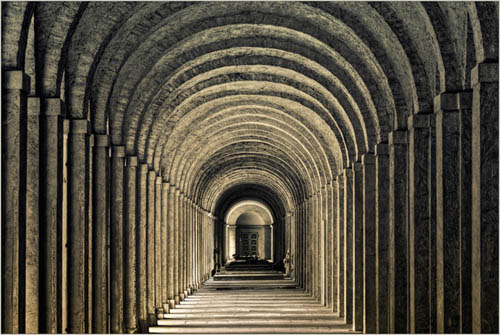 In last Sunday’s sermon I “outed” myself as a mystic. Clearly not a FAMOUS mystic, but I do have mystical tendencies, value the teachings of Christian mystics (in particular) and I have embraced a number of spiritual practices that are often labeled “good for mystics”.
My journey with mysticism began when I was introduced to the great medieval Christian mystic Hildegard von Bingen. Hildegard’s life and writing, in particular, resonate with me because I also love her beautiful music. Singing, chanting, and playing music from a place of spiritual contemplation is still my most beloved (and effective!) spiritual practice. Long before I knew anything about mysticism, I had already discovered that playing the piano was a way that I could experience the divine in an immediate and powerful way. In the throes of adolescence when I knew I was “different” or when things weren’t going well, the piano was my refuge.
In seminary, my spiritual director first challenged me to consider a silent retreat. This was no surprise since spiritual directors are pretty much honor bound to suggest these things. In addition, I’m pretty sure he thought that this might be a way to tame some of my extreme extroversion, too. Still, his invitation wasn’t really the thing that finally got me to go to a convent and to later crave silence and contemplative spiritual practice.
Sometime, somewhere in the early 90’s, I heard an interview with Nelson Mandela that changed my thinking completely about the importance of silence and contemplation. The interviewer asked Mandela how it was that he came to embrace forgiveness and reconciliation after all that had been done to him by the apartheid regimes. Mandela spoke of what it was like to spend so many years alone and in silence while he was in prison. He then told the interviewer that once he truly had seen his own soul in this way, he knew something about his own failings and need for forgiveness. And in the silence, trying to face up to his own failures and need for forgiveness, he became committed to the path of forgiveness and reconciliation for all peoples. The rest of that story, of course, is history that we are now remembering upon the occasion of Mandela’s death.
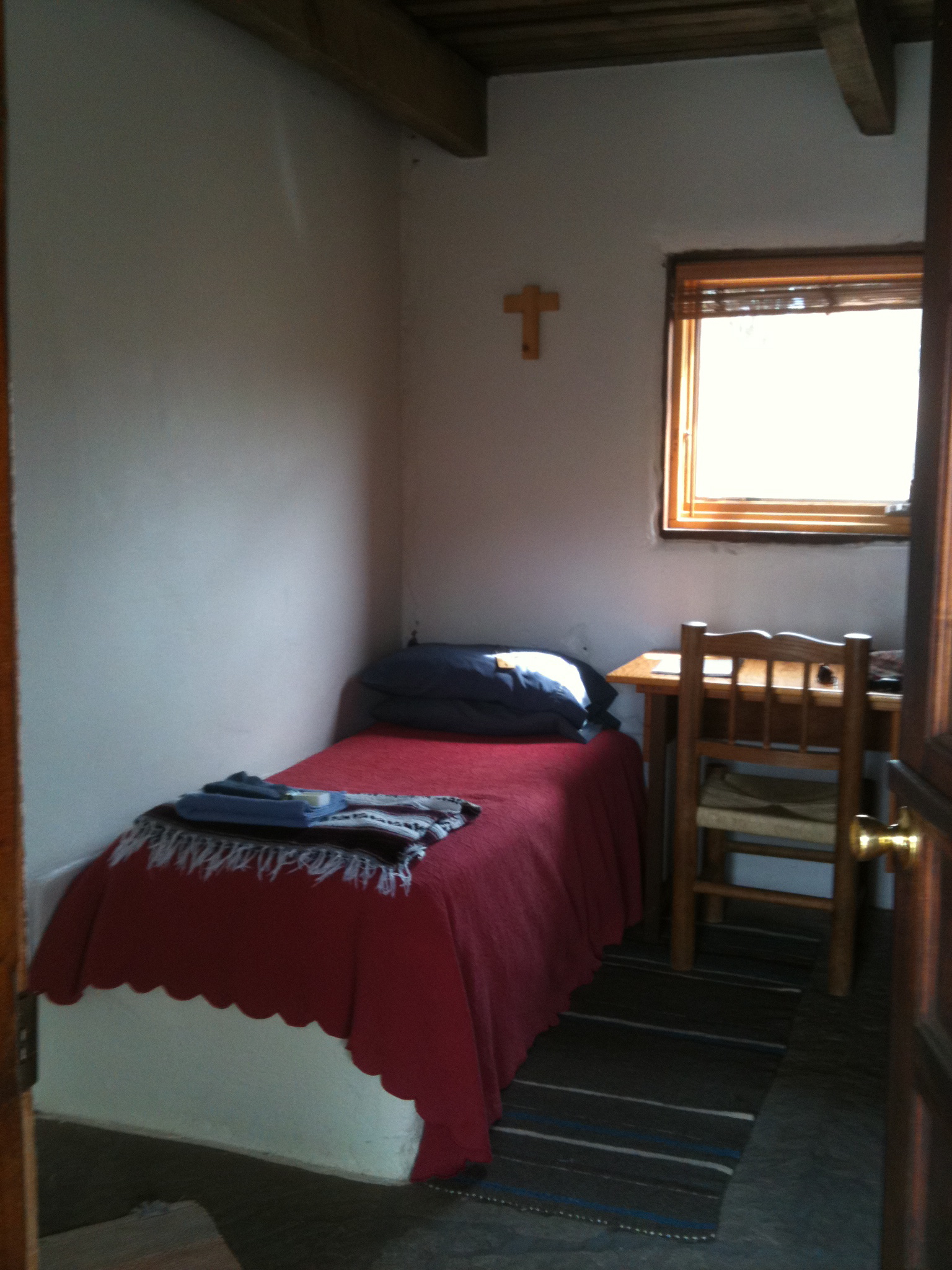 So without being arrested and hauled off to prison, I decided to follow Mandela’s spiritual path by voluntarily committing myself to at least a few days in a monastic cell. My first silent retreat was really hard. I chose to go to a Franciscan convent in the Santa Cruz mountains near Soquel, California called St. Clare’s Retreat. While I was on a personal retreat, there was a large group from a Hispanic Roman Catholic parish in San Jose there at the same time. The young priest from Mexico who was leading their retreat spoke little English and so mealtimes were a multi-layered, multi-cultural experience for me. But the real difficulty came when I sat in my “cell” and was forced to listen to my own mind for hours on end.
In the stillness, I watched my own fears and insecurities rise up like demons. Every error, every mistake I had ever made haunted my every moment-by-moment decision-making about whether to read, walk around, or try to work on a sermon on Yael for my preaching class. The choice to bring Yael as a companion on a silent retreat was particularly bad. (and it didn’t produce one of my best sermons either)
During this first retreat, I discovered why so many monasteries have structured prayer times. It is very difficult to constantly choose for yourself how to spend your time in solitude. The bells that called us all to the chapel for prayer were a relief from having to confront your own inner craziness. This insight alone was life-changing for me. Feeling stressed, lonely, or sad? Lean on a structure that feeds your spirit. Plan times for meditation, walking, exercise, music practice and you’ll be less crazy. And there are so many potential spiritual practices – just about anything that you do in some regular way at a regular time can be of great comfort in times of distress.
 Since that first retreat over twenty years ago, I have made time for silent retreat as often as possible and two years ago, I finally found the monastery that provides the perfect mix of spiritual practices for me.
Christ in the Desert is located about 45 minutes off the highway past Ghost Ranch in Northern New Mexico. The landscape alone brings me to awe. The community of monks follows a form of primitive Benedictine practice. They begin at 4:00 a.m. with the office of Vigils and they then pray the full monastic office. In each of these offices, the monks chant the psalms, and if you go for a full week, you can chant all 150 psalms. The singing is acappella and based upon ancient psalm tones that are notated in such a way that significant training in music (or monasticism) is required in order to participate. Most folks simply listen to the monks, but I enjoy that my early music professor Dr. Anne Schnoebelen at Rice taught us to read this notation so I get to sing all day!
Chanting the psalms is another window into the breadth and depth of the human soul. While there are beautiful words of praise and thanksgiving, many psalms have large sections of violent pleadings for revenge asking God to “smite” the psalmist’s enemies. It is humbling to sing these texts and “put these words in your own mouth” because – in the silence – you come to understand that some part of your soul prays this way all the time. But just as you recognize your own internal violence, another psalm will call you to repentance and new life, and then back to praise and thanksgiving.
While contemplative spirituality does not appeal to everyone, it certainly is unfair to label such practices as “navel-gazing” or “self-serving”. In my own experience, these practices have been instrumental in helping me become more compassionate and forgiving of myself and of others.
And so today I will light a candle, chant the psalms, and give thanks for the life of Nelson Mandela who learned to change the world by first starting with his own soul. In silence.
Friday, December 6th, 2013
 Please join us this Sunday, December 15th at 10:00 a.m. Our choir will be singing beautiful music of the Renaissance and Pastor Melinda will preach a sermon entitled “The Holy Way” based upon the beautiful poem found in Isaiah 15: 1-10.
Plan now to attend our child-centered Christmas Eve Service on Tuesday, December 24th at 5:30 p.m. We will build the Christmas creche, sing carols by candlelight and enjoy hot cider and treats following the service. Perfect for all ages!
Click here to download a flyer of all the events for the season here at Montclair Presbyterian Church. 2013 Christmas Events Flyer (pdf)
Thursday, December 5th, 2013
 Monday, January 13th at 7pm, spiritual writer Thomas Moore will be at MPC discussing his new book A Religion of One’s Own. This latest work “points the way to creating an amplified inner life and a world of greater purpose, meaning, and reflection” (indiebound.com). We hope you will join us for what is sure to be a fascinating evening.
From his website careofthesoul.net:
Thomas Moore is the author of the bestselling book Care of the Soul and fifteen other books on deepening spirituality and cultivating soul in every aspect of life. He has been a monk, a musician, a university professor, and a psychotherapist, and today he lectures widely on holistic medicine, spirituality, psychotherapy, and the arts. […] He writes regular columns for Resurgence, Spirituality & Health, and The Huffington Post and has recently published Writing in the Sand: The Spirituality of Jesus and the Soul of the Gospels, Care of the Soul in Medicine, and The Guru of Golf and Other Stories about the Game of Life. Much of his recent work has focused on the world of medicine, speaking to nurses and doctors about the soul and spirit of medical practice.
Wednesday, November 27th, 2013
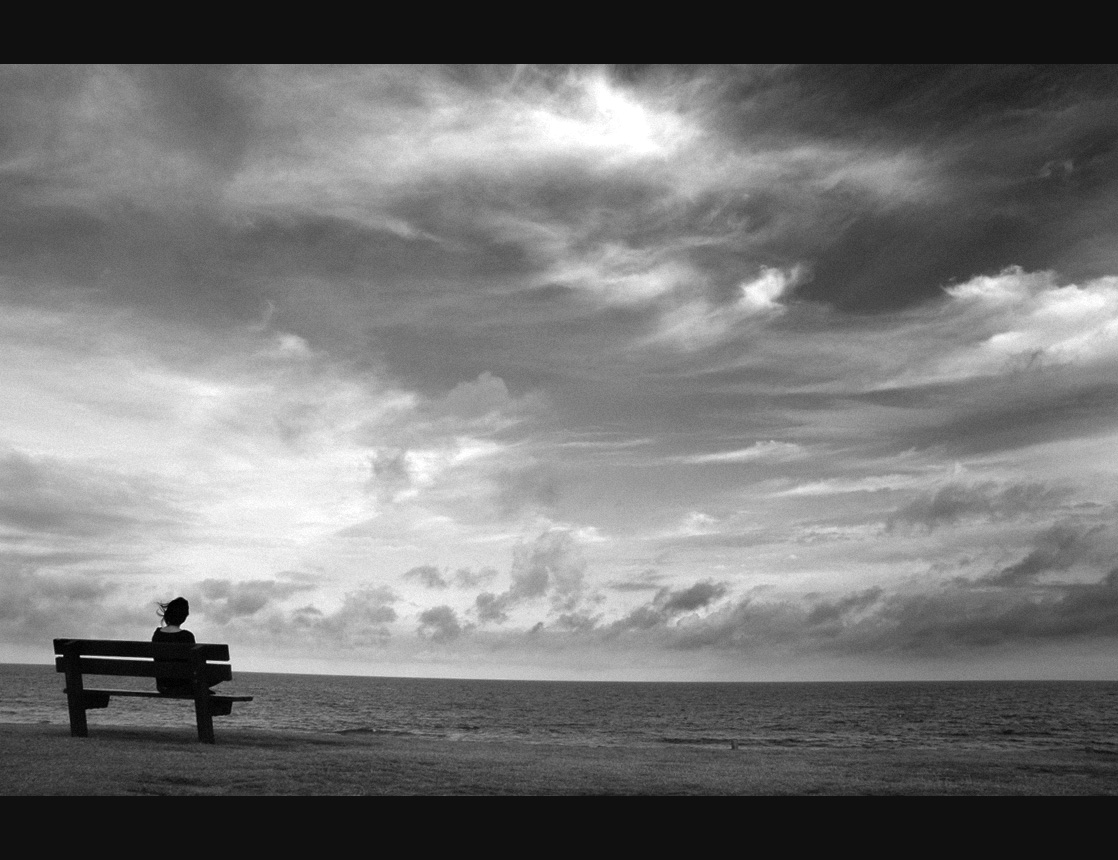 Like most Americans, I don’t really like to wait. Not in line, not in traffic, not really for anything. And waiting to get on the freeway, or into a movie, or for coffee in my favorite bistro really is sort of pointless. When the waiting is done, the payoff is pretty small.
Unfortunately, my lack of being able to wait for small things makes me unable to wait comfortably for the big things such as insight and wisdom, courage and reason. But until I can let go of my desire for instant gratification, I cannot attain the greater joys of life. And that’s hard. And it means I have to wait, and think, and learn to not give in to every whim.
In Ken Burns new film, “The Dust Bowl”, there is a wonderful insight from a survivor of that horrible era of man-made ecological devastation who explains why what happened then, keeps happening again and again. He says, “We want it right now–and if it makes money now it’s a good idea. But if the things we’re doing are going to mess up the future, it wasn’t a good idea. Don’t deal in the moment. Take the long-term look at things.”
Lots of new age gurus and some very serious spiritual folks teach that learning to live in the present moment can change everything. And there is no question that living every moment well is a deeply powerful spiritual practice. I am always trying to be here now and not be tied to the past or too focused on what comes next.
But what will it take for us to resist “dealing in the moment” and giving in to a consumerist culture that will eventually kill us all? Everything I want right now will not serve me (or any of us) well in the future. Some things are worth working towards and sometimes we must keep our eyes on the horizon and our rampant desired in check.
My great-grandparents in the Texas Panhandle were a hearty, thrifty, and rugged bunch. They survived the “dirty 30’s”, World War II and the horrendous drought of the 1950’s. They scrimped, saved, and reused everything. All the “green” practices we are trying to adopt today regularly make me think of my great grandmother who saved foil, mended dresses and shoes, and didn’t think that anything was “disposable”. In her diaries, she accounted for every chick, chicken, and egg in meticulous detail. She wrote down prices for everything and always knew the price of milk (and wheat) to the penny. Waste was an abomination to her because she knew about real deprivation – not just a momentary act of self-restraint.
They used wind chargers on the windmill so that they could have electric light in the evening and rigged up various ways of naturally preserving food to make it through the winter. Having a roasted chicken for dinner meant catching, killing, plucking AND cooking. And after the meal, using the carcass to make chicken and dumplings. No waste anywhere in the whole process.
Personally, I don’t want to go back to a time without easy electricity and to having to kill my own dinner. But I do think that our fast, disposable, and recklessly wasteful ways will not be good for humanity in the long-term. We are “dealing in the moment” and as a nation we have been foolishly squandering our natural world for a long time and there are dire consequences on the horizon.
The season of Advent in the Christian tradition is often described as a time of preparation, gestation, and waiting for the miracle of Christmas. In the Northern hemisphere, the darkness of winter time shrouds this season in mystery. But in churches all over the world, for thousands of years, Advent candles have been lighted to remind believers of the power of light in the midst of darkness.
Waiting is hard and resisting the cultural imperative to quickly get what you want when you want it is also difficult. It’s perhaps even revolutionary. My invitation to myself this Advent season is to pay attention to my own desires for comfort and ease and to be curious about the long term effects of instant gratification upon my soul. Or maybe I will simply learn to wait.
Wednesday, November 27th, 2013
 This Sunday is the first Sunday of Advent and when you arrive at Montclair Presbyterian for Celebration at 10:00 a.m. you will find that we have been visited by angels and poinsettias already! So even though the season of Advent is a time of preparation for the coming of the Christ child into the world again – it is also a season of joy and beauty made manifest in our sanctuary.
We will begin our service with a processional of the Advent wreath and then we will light the first candle – the candle of peace. The text for the sermon is from the prophet Isaiah 2: 1-5. This ancient poem imagines a world of peace where “swords are beaten into ploughshares and spears into pruning hooks; nation shall not lift up sword against nation, neither shall they learn war any more.”
Take a break from the hustle and bustle and come join us this Sunday and throughout the holiday season. Happy Advent!
Monday, November 25th, 2013
Rev. Melinda discusses Luke 12:13 (the foolish rich man), showing how the story illustrates the importance of valuing what we give over what we have, and of focusing on what we’re truly grateful for.
Podcast: Play in new window | Download