

Posts Tagged ‘prayer’

Mandela and the Power of Silence

Friday, December 6th, 2013

View just this post

void-of-silenceIn last Sunday’s sermon I “outed” myself as a mystic. Clearly not a FAMOUS mystic, but I do have mystical tendencies, value the teachings of Christian mystics (in particular) and I have embraced a number of spiritual practices that are often labeled “good for mystics”.


My journey with mysticism began when I was introduced to the great medieval Christian mystic Hildegard von Bingen. Hildegard’s life and writing, in particular, resonate with me because I also love her beautiful music.  Singing, chanting, and playing music from a place of spiritual contemplation is still my most beloved (and effective!) spiritual practice. Long before I knew anything about mysticism, I had already discovered that playing the piano was a way that I could experience the divine in an immediate and powerful way. In the throes of adolescence when I knew I was “different” or when things weren’t going well, the piano was my refuge.


In seminary, my spiritual director first challenged me to consider a silent retreat. This was no surprise since spiritual directors are pretty much honor bound to suggest these things. In addition, I’m pretty sure he thought that this might be a way to tame some of my extreme extroversion, too. Still, his invitation wasn’t really the thing that finally got me to go to a convent and to later crave silence and contemplative spiritual practice.


Sometime, somewhere in the early 90’s, I heard an interview with Nelson Mandela that changed my thinking completely about the importance of silence and contemplation. The interviewer asked Mandela how it was that he came to embrace forgiveness and reconciliation after all that had been done to him by the apartheid regimes. Mandela spoke of what it was like to spend so many years alone and in silence while he was in prison. He then told the interviewer that once he truly had seen his own soul in this way, he knew something about his own failings and need for forgiveness. And in the silence, trying to face up to his own failures and need for forgiveness, he became committed to the path of forgiveness and reconciliation for all peoples. The rest of that story, of course, is history that we are now remembering upon the occasion of Mandela’s death.
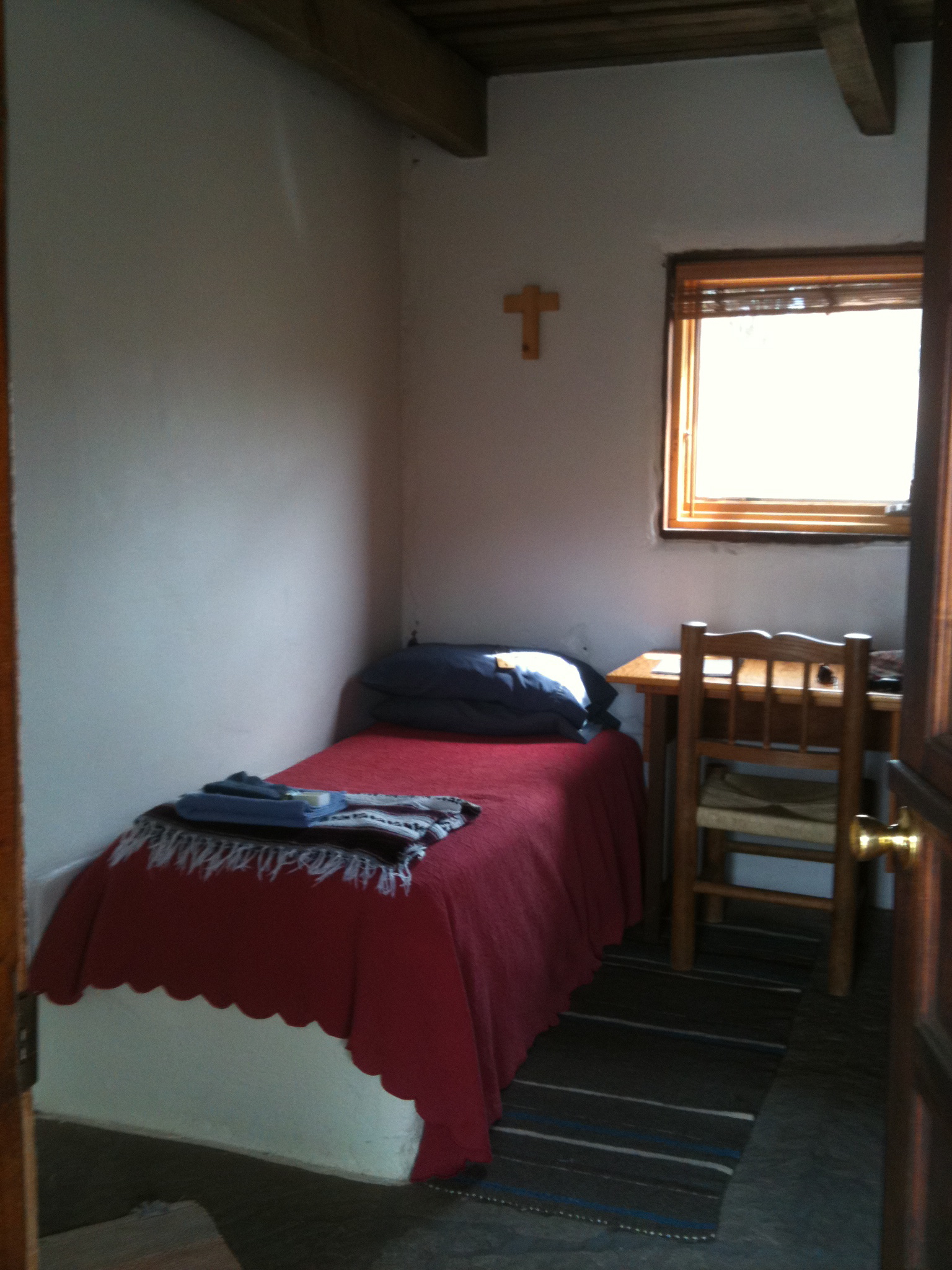
 

IMG_0346So without being arrested and hauled off to prison, I decided to follow Mandela’s spiritual path by voluntarily committing myself to at least a few days in a monastic cell. My first silent retreat was really hard. I chose to go to a Franciscan convent in the Santa Cruz mountains near Soquel, California called St. Clare’s Retreat.  While I was on a personal retreat, there was a large group from a Hispanic Roman Catholic parish in San Jose there at the same time. The young priest from Mexico who was leading their retreat spoke little English and so mealtimes were a multi-layered, multi-cultural experience for me. But the real difficulty came when I sat in my “cell” and was forced to listen to my own mind for hours on end.


In the stillness, I watched my own fears and insecurities rise up like demons. Every error, every mistake I had ever made haunted my every moment-by-moment decision-making about whether to read, walk around, or try to work on a sermon on Yael for my preaching class. The choice to bring Yael as a companion on a silent retreat was particularly bad. (and it didn’t produce one of my best sermons either)


During this first retreat, I discovered why so many monasteries have structured prayer times. It is very difficult to constantly choose for yourself how to spend your time in solitude. The bells that called us all to the chapel for prayer were a relief from having to confront your own inner craziness. This insight alone was life-changing for me. Feeling stressed, lonely, or sad? Lean on a structure that feeds your spirit. Plan times for meditation, walking, exercise, music practice and you’ll be less crazy. And there are so many potential spiritual practices – just about anything that you do in some regular way at a regular time can be of great comfort in times of distress.


IMG_0343Since that first retreat over twenty years ago, I have made time for silent retreat as often as possible and two years ago, I finally found the monastery that provides the perfect mix of spiritual practices for me.


Christ in the Desert is located about 45 minutes off the highway past Ghost Ranch in Northern New Mexico. The landscape alone brings me to awe. The community of monks follows a form of primitive Benedictine practice. They begin at 4:00 a.m. with the office of Vigils and they then pray the full monastic office.  In each of these offices, the monks chant the psalms, and if you go for a full week, you can chant all 150 psalms. The singing is acappella and based upon ancient psalm tones that are notated in such a way that significant training in music (or monasticism) is required in order to participate. Most folks simply listen to the monks, but I enjoy that my early music professor Dr. Anne Schnoebelen at Rice taught us to read this notation so I get to sing all day!


Chanting the psalms is another window into the breadth and depth of the human soul. While there are beautiful words of praise and thanksgiving, many psalms have large sections of violent pleadings for revenge asking God to “smite” the psalmist’s enemies. It is humbling to sing these texts and “put these words in your own mouth” because – in the silence – you come to understand that some part of your soul prays this way all the time. But just as you recognize your own internal violence, another psalm will call you to repentance and new life, and then back to praise and thanksgiving.


While contemplative spirituality does not appeal to everyone, it certainly is unfair to label such practices as “navel-gazing” or “self-serving”. In my own experience, these practices have been instrumental in helping me become more compassionate and forgiving of myself and of others.

 
And so today I will light a candle, chant the psalms, and give thanks for the life of Nelson Mandela who learned to change the world by first starting with his own soul. In silence.
 

What are you waiting for?

Wednesday, November 27th, 2013

View just this post

Waiting-1Like most Americans, I don’t really like to wait. Not in line, not in traffic, not really for anything. And waiting to get on the freeway, or into a movie, or for coffee in my favorite bistro really is sort of pointless. When the waiting is done, the payoff is pretty small.


Unfortunately, my lack of being able to wait for small things makes me unable to wait comfortably for the big things such as insight and wisdom, courage and reason. But until I can let go of my desire for instant gratification, I cannot attain the greater joys of life. And that’s hard. And it means I have to wait, and think, and learn to not give in to every whim.

In Ken Burns new film, “The Dust Bowl”, there is a wonderful insight from a survivor of that horrible era of man-made ecological devastation who explains why what happened then, keeps happening again and again. He says, “We want it right now–and if it makes money now it’s a good idea. But if the things we’re doing are going to mess up the future, it wasn’t a good idea. Don’t deal in the moment. Take the long-term look at things.”

Lots of new age gurus and some very serious spiritual folks teach that learning to live in the present moment can change everything. And there is no question that living every moment well is a deeply powerful spiritual practice.  I am always trying to be here now and not be tied to the past or too focused on what comes next.

But what will it take for us to resist “dealing in the moment” and giving in to a consumerist culture that will eventually kill us all?  Everything I want right now will not serve me (or any of us) well in the future. Some things are worth working towards and sometimes we must keep our eyes on the horizon and our rampant desired in check.

My great-grandparents in the Texas Panhandle were a hearty, thrifty, and rugged bunch.  They survived the “dirty 30’s”, World War II and the horrendous drought of the 1950’s.  They scrimped, saved, and reused everything.  All the “green” practices we are trying to adopt today regularly make me think of my great grandmother who saved foil, mended dresses and shoes, and didn’t think that anything was “disposable”.  In her diaries, she accounted for every chick, chicken, and egg in meticulous detail.  She wrote down prices for everything and always knew the price of milk (and wheat) to the penny.  Waste was an abomination to her because she knew about real deprivation – not just a momentary act of self-restraint.

They used wind chargers on the windmill so that they could have electric light in the evening and rigged up various ways of naturally preserving food to make it through the winter.  Having a roasted chicken for dinner meant catching, killing, plucking AND cooking.  And after the meal, using the carcass to make chicken and dumplings.  No waste anywhere in the whole process.

Personally, I don’t want to go back to a time without easy electricity and to having to kill my own dinner.  But I do think that our fast, disposable, and recklessly wasteful ways will not be good for humanity in the long-term.  We are “dealing in the moment” and as a nation we have been foolishly squandering our natural world for a long time and there are dire consequences on the horizon.

The season of Advent in the Christian tradition is often described as a time of preparation, gestation, and waiting for the miracle of Christmas.  In the Northern hemisphere, the darkness of winter time shrouds this season in mystery.  But in churches all over the world, for thousands of years, Advent candles have been lighted to remind believers of the power of light in the midst of darkness.

Waiting is hard and resisting the cultural imperative to quickly get what you want when you want it is also difficult.  It’s perhaps even revolutionary.  My invitation to myself this Advent season is to pay attention to my own desires for comfort and ease and to be curious about the long term effects of instant gratification upon my soul.  Or maybe I will simply learn to wait.


Walking Together

Saturday, August 31st, 2013

View just this post

Heart-shaped labyrinth (small)When I interviewed with the Session of Montclair Church about the possibility of becoming your Temporary Supply Pastor, they asked me a great question: “what do you need from us?”  I told them the usual things about “setting priorities” and “giving good feedback” and then I told them that my biggest personal concern about becoming your pastor is that I would find a way to keep up my walking regime.  I then told them about my idea of having “walking office hours” on Tuesdays and Thursdays between 4 and 6 p.m.

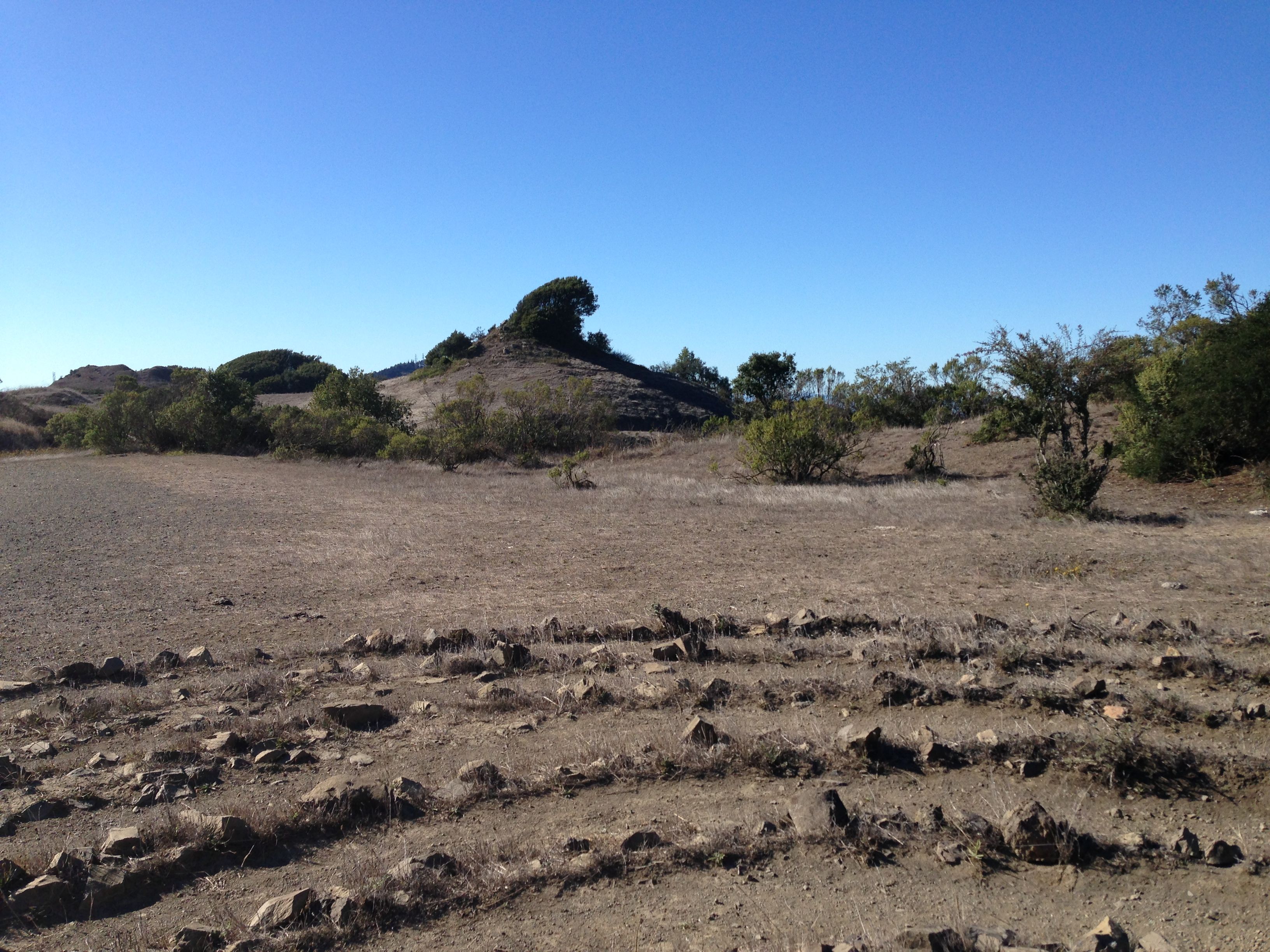
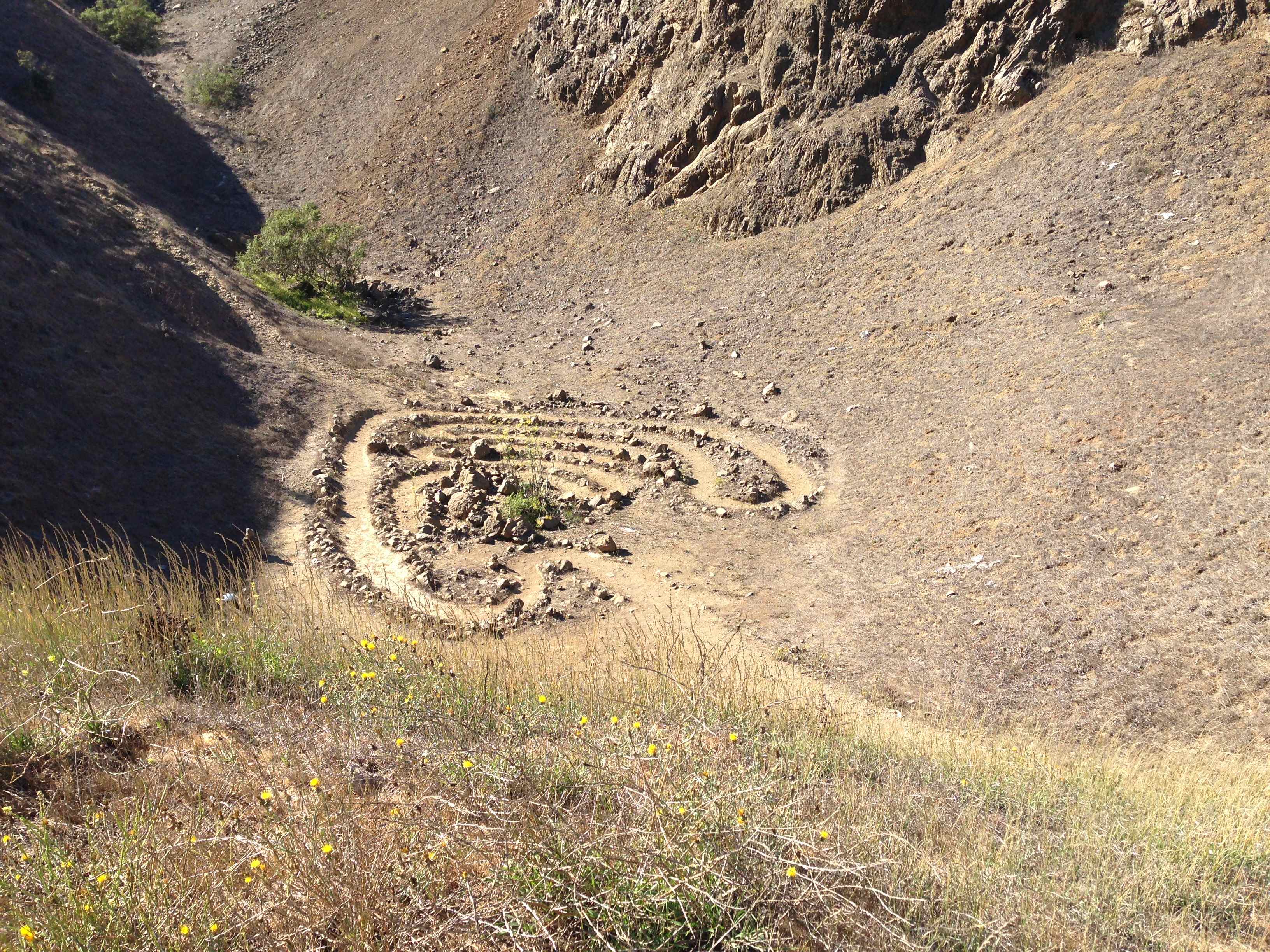
I’m pleased to report that your Session is faithful to their promises and Margaretha Derasary took me for my first walk on Thursday.  We drove up Thornhill to Skyline and then went for a walking tour of the labyrinths in Sibley Volcanic Park.  It was warm, but not hot, and the views were spectacular!  We could see Mount Diablo and the inland valleys in one direction and Karl the Fog (twitter handle for the San Francisco fog) billowing in through the Golden Gate when looking the other way.

And then there are the labyrinths.  Margaretha says that “no one knows who made them, but they were made in the ’60’s”.  I was struck by the beauty and simplicity of these rock labyrinths.  One is clearly heart-shaped and the other two follow basic Cretan patterns that I recognize as being similar to the labyrinth that Noe Valley Ministry painted on their floor a number of years ago.  In a 2011 article in the San Francisco Chronicle, the mystery of the labyrinths is partially solved.  Apparently one of them was created by Helen Mazariello in 1989 as a “gift to the world”.  It didn’t identify which labyrinth is hers, however, so there is still some mystery involved – even after this article.  A previous article in the Chron in 1999 alleges all sorts of amusing theories about these labyrinths from “witches” to “extra-terrestrials”.  I think I agree with Margaretha that they were probably built by hippies in the 60’s.

Cretan LabyrinthWhile Margaretha would have been fine clamboring down to walk all the labyrinths in their separate pits in the quarry, I wasn’t feeling quite up to the task, so we only walked one of the labyrinths that was placed amidst low hills with a wonderful view of a Dr. Seuss-shaped tree.

I have walked the Chartres-style labyrinths in Grace Cathedral many times and have been to a couple of workshops about this ancient spiritual practice.  Medieval labyrinths like the ones in Chartres cathedral in France were created for many reasons, but it is believed that many walked them in lieu of actually going to the Holy Land with the crusades.  For these stationary pilgrims, walking the labyrinth was a metaphor for the perilous journey taken by crusaders.  Not a particularly appealing purpose for labyrinth walking in my opinion, but it is a very appealing idea to walk a labyrinth as form of pilgrimage.

As we entered the labyrinth, I took a moment to center myself and asked my self the question, “what do I want to let go of?”.  I then entered and Margaretha allowed some space and came in behind me.  As I walked, I consciously let go of some neck pain and let my mind wander as to what else I could helpfully leave behind on my walk to the center. Along the way, as we passed each other on different parts of the path, Margaretha and I paused to simply be together before walking on our separate, yet same, path.

In the center, I simply prayed to be able to receive any wisdom or insight that might come while walking out.  As my mind drifted, I thought about the mysterious origins of these labyrinths.  Soon I was thinking about how little I know about most things that have been a great gift to me.  This pattern of labyrinth has been appearing on the earth since pre-historic times, but this ancient practice is now available to me and it helps me clear my mind and heart.  Walking a labyrinth is a spiritual practice that always leaves me renewed and often leads to new insight.  Such a wonder that something so simple and ancient is still SO effective!  It is a relief to realize that we are not always obliged to create something new for it to be re-newing.

Thank you to Margaretha for a perfect start to my first walking office hours, the wonderful conversation, and for showing Sibley to me.  Now if anyone else wants to go walking, do let me know, I know some cool labyrinths I could show you!  Or better yet, show me your favorite trails, even if it is simply a walk around the neighborhood. Blessings to you all and WALK ON! – Melinda