
Composed by Bobby McFerrin
Podcast (music-samples): Play in new window | Download




Monday, November 25th, 2013
Composed by Bobby McFerrin
Podcast (music-samples): Play in new window | Download
Wednesday, November 20th, 2013
 “The essence of philosophy is that a (hu)man should so live that his (or her) happiness shall depend as little as possible on external things.”- Epictetus
This Sunday we will spend a bit of time counting our blessings and pondering the meaning of things in our individual and common life as preparation for Thanksgiving the following week using Luke 12: 13-21 as our point of departure and a sermon entitled, “Foolishness on the Farm”.
Do join us at 10:00 a.m. with your blessings in mind!
We will also be preparing the sanctuary and family room for Advent and Christmas in the afternoon. If you’d like to help, just let us know.
Monday, November 18th, 2013
MPC Music Director Kim Rankin celebrates 25 years of organist Marcia Roy’s service to MPC, reading recollections from former MPC pastors and music directors, as well as adding her own commentary.
Podcast: Play in new window | Download
Monday, November 18th, 2013
By Steven Schwartz
Bill Fahrner, Solo
Brandon Adams, Piano
Podcast (music-samples): Play in new window | Download
Monday, November 18th, 2013
Text by Horace Everett
Music by Aaron Copland
Marcia Roy and Brandon Adams, Piano
Podcast (music-samples): Play in new window | Download
Monday, November 18th, 2013
Text from Song of Songs
Music by Rene Clausen
Podcast (music-samples): Play in new window | Download
Monday, November 18th, 2013
Poem by Robert Frost
Music by Randall Thompson
Podcast (music-samples): Play in new window | Download
Wednesday, November 13th, 2013
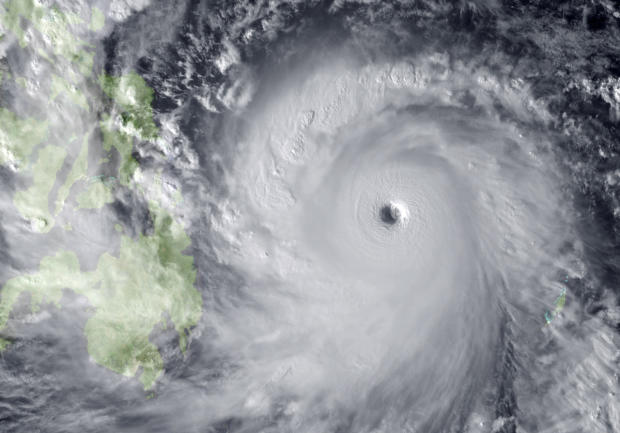 Typhoon Haiyan presents a poignant opportunity for us as people of faith to exercise both our compassion and justice muscles. The devastation is catastrophic for cities that were in the direct path of the storm and the needs are overwhelming. Working together in times of crisis in our extended human family to pool our resources is yet another reason for “why church?” And because we regularly give to disaster ministries through One Great Hour of Sharing means that we have already prepaid the overhead for 100% of our special donations now to go directly to relief efforts.
You may also give on Sunday and write “Philippines Storm Relief” on the memo line of your check (made out to MPC). This is the work of compassion that is desperately needed for those who have been impacted.
And yet, what about the justice issues attached to this disaster? (see my recent blog on Justice and Compassion) Many of us are quite clear that “superstorms” such as Typhoon Haiyan and last year’s Hurricane Sandy are part of our rapidly accelerating climate crisis. Our sisters and brothers in the Philippines have no doubt that this record-shattering storm is a harbinger of increasing damage and destruction resulting from global warming. As a result, their government has already called for an immediate end to the stalemate on international climate talks held this week in Poland and an “emergency climate pathway” to be found immediately.
The political climate in the United States is just as toxic as the carbon that is at the root of this climate crisis. Sometimes it seems as if even those leaders who support immediate action on climate change have just given up in the face of hostile resistance from their opponents. How can we help with this justice work? What resources can we pool together to address this planetary emergency? I know many of you have been engaged on these issues for a long time both through the church and beyond the church and I am deeply grateful and proud to be among you in this work.
Still, even as we give to help the victims, let’s “keep on keeping on” with the justice work too.
Love and many blessings,
Melinda
Sunday, November 10th, 2013
Rev. Melinda continues her discussion about the reason for church, this time focusing on the ways it can help us gather with others, rise up, and change the world in the face of cynicism and despair.
Podcast: Play in new window | Download
Friday, November 8th, 2013
 Justice is what love looks like in public – Dr. Cornel West
There is an old story told about a village on a river that I first heard from a nun friend, but it seems to be so old (and pervasive) that I could not find an origin. If anyone can name the source, I’ve got a lollypop with your name on it!
Once there was a village next to a river. On one fine afternoon, the villagers were shocked to discover the body of drowned man on the shorline. They hauled his body out of the water and gave him a proper burial. The next day they noticed an injured man floating in the river, so strong swimmers were dispatched to rescue him and bring him ashore where the villagers nursed him and cared for him, but he died too without being able to tell them how he wound up in the river. Soon the villagers were hauling men, women, children, and even babies out of the river. Most died, but a few lived for a little while.
In the midst of providing compassion for the victims that arrived at their village via the river, some of the villagers decided to go upstream to try to discover why so many people were winding up in the river. They soon discovered a group of bandits were robbing and beating travelers on a bridge and throwing their bodies into the river. The villagers that went upstream eventually were able to bring the bandits to justice and then there were no more victims washing ashore downstream.
This story is told as a simple way to understand the difference between compassion (downstream) work and justice (upstream) work. In my experience, most people gravitate strongly towards being upstream or downstream folks. Some people have done both over the years, but most orient one way or the other. It is also true that exercising compassion and justice is never so easy. Finding the root causes of hurt in the world rarely happens by simply taking a little hike. And caring for those who are struggling and injured and in need is a very big job too.
Of course, in a desperately hurting world, we need to be engaged in both compassion and justice because neither is adequate alone. Justice without compassion is uninformed and can be heartless. And compassion without justice is anemic and eventually futile. Unfortunately, those of us who orient mostly towards either side of the justice/compassion coin can often be quite judgmental towards those who are upstream or downstream of our own interests even though we may intellectually understand the value of both.
In my own life, I have certainly been engaged upstream for long periods of time and downstream at other times. I truly value both and also know that I am prone to burn out if I don’t do both at various times and/or seasons of my life. I also believe that it is exceptionally important for a community to make sure to make room for both and to be very clear about the differences in these activities. We can also celebrate that sometimes our activities can do both.
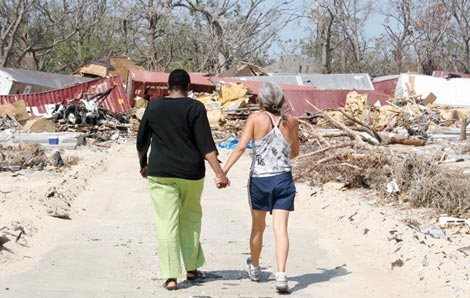
Less than a year after Hurricane Katrina hit the Gulf Coast and the massive public policy failure that is/was the levee system devastated New Orleans, I was honored to help lead a retreat for women impacted by the disaster. Led by the Rev. Dr. Curran Reichert, a team of UCC pastors facilitated a weekend retreat for fifty women who were trying to put their lives back together. The retreat gave the women a chance to stay in a lovely hotel and take long baths, get some rest from the harshness of living in a FEMA trailer, and have some time to reflect on what had happened to them. What we got as leaders was some profound lessons about spiritual maturity in the wake of tragedy.
The experience of this retreat also shifted my own thinking about the relationship between compassion and justice. One story still stands out. We were meeting in small groups and Curran had given the groups this question: “What are the gifts of the storm for you?” Almost every woman talked about the gift of discovering that things don’t really matter. “I feel so much freer and closer to God without all that stuff. I know what really matters now”, said a young Euro-American woman who was living with two children in a FEMA trailer. “I don’t ever want my life to be about “having things” again. I want to travel light.”
Another older African-American woman then said, “Well, I had to let go of some of my opinions.” When pressed to say more, she said, “Imagine this: the ONLY people who came to help me muck out my house were some GAY JEWISH WHITE MEN from NEW YORK. And so I had to rethink A LOT of things after that.” We all laughed wondering what was harder for her: that they were gay, Jewish, white, or Yankees.
I often tell this story in lgbt settings because I think it shows the power of compassion in the cause of justice. Those gay men powerfully moved the cause of lgbt acceptance forward through service. I’m quite certain that this woman’s gift of changed opinions could be replicated many times over and break-through some of the most resistant forms of homophobia.
On this day when another extreme storm has struck our sisters and brothers in the Philippines, we will need to stretch our compassion to all those directly impacted by the storm AND continue to sound the clarion call about the need to address global climate change. This is the power of compassion and justice working in tandem. But we need not all be engaged in both. The concrete implications come when some of us will want to donate to the Red Cross and others will want to give to climate action groups. All of it is useful.
So whether you are a hands-on compassion person or a right-on justice person, I encourage all of us to use our specific gifts well and to give big thanks for those who are doing a different part of the work because all our gifts are highly desirable and valuable.