
Arranged by Mark Hayes
Marcia Roy, Piano
Podcast (music-samples): Play in new window | Download

Monday, September 23rd, 2013
Arranged by Mark Hayes
Marcia Roy, Piano
Podcast (music-samples): Play in new window | Download
Saturday, September 21st, 2013
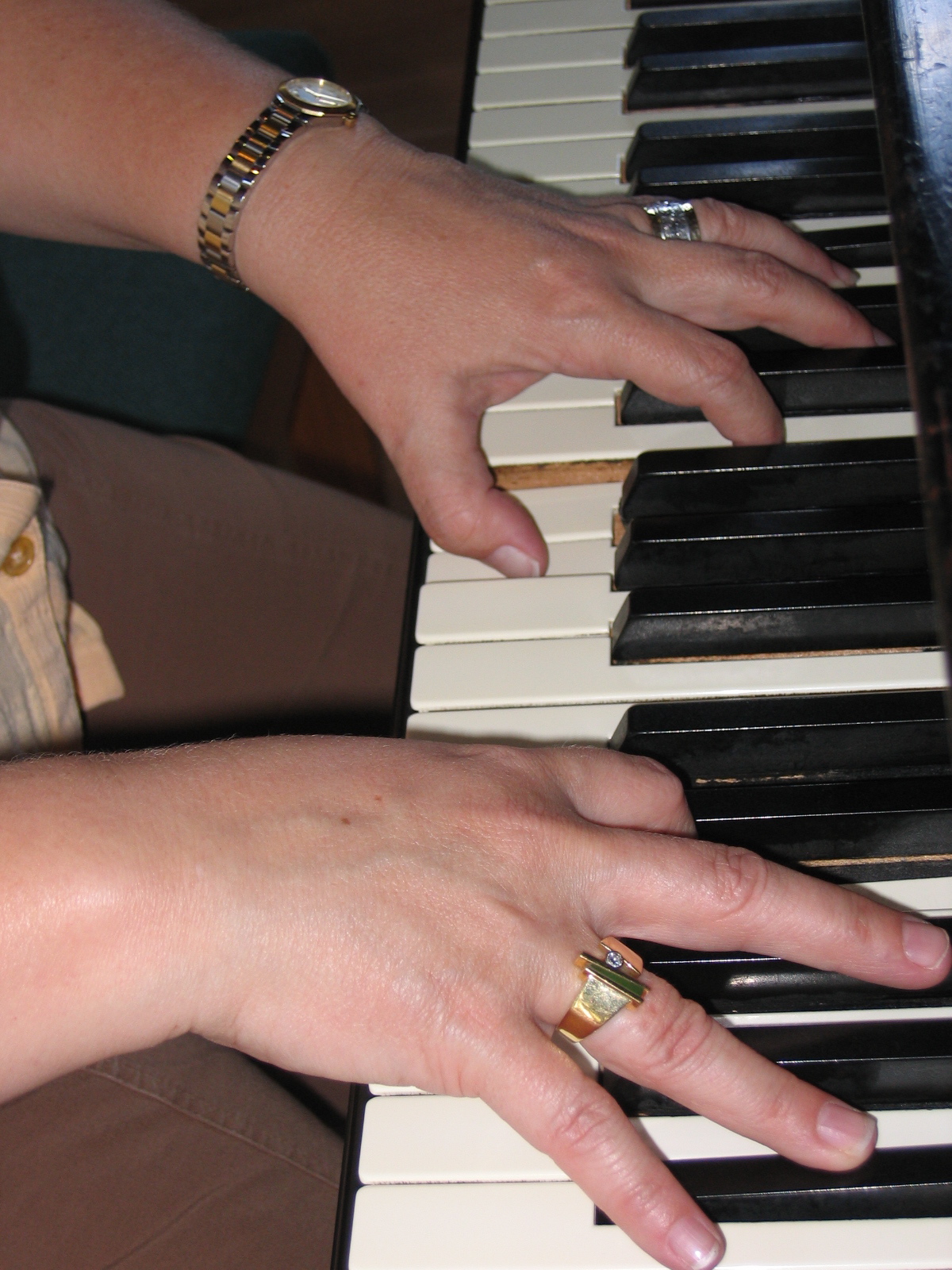 If you have read any of the posts on my personal blog, you will at once notice that I have written a number of posts on practice.
Spiritual practice, musical practice, ethical practice, best practice: practice, practice, practice! It certainly seems obvious that a longtime musician is committed to practice, but there is a deeper historical and theological component to my fascination with practice.
As a child growing up in a small Presbyterian church in the Texas panhandle, and then in big Presbyterian churches in Midland and Houston, I don’t ever remember hearing the term spiritual practice. Through all those years, I was certainly practicing music all the time, and I knew that if you wanted to play Beethoven and Brahms you were going to have to practice, but I didn’t have a clue as to how to “practice” my faith. I think, like most people, that faith as I learned it, was a set of belief systems that helped you to get closer to God and then live your life well. If you got your beliefs in order, then a good and happy life would follow. The difference was subtle, but important as we did many of the practices I now value. We prayed, we sang, we served, but somehow I learned that practice followed belief and I failed to learn that good spiritual practice could actually lead to belief.
This “faith before practice” spiritual life fell apart when so many friends got sick and then died from HIV/AIDS. I couldn’t find a belief system that explained this repeating horror. My experience of those years made me question everything. Does God exist? And if so, and if God is good and if God is love, than why are my friends dying so horribly? And why would a loving and gracious God tolerate having followers who simply heaped invective upon invective upon those of us who were suffering? And worse yet, if God is not good and God is not love, but is indeed the vengeful, wrath-filled villian who has inflicted HIV/AIDS upon all these beautiful young people all over the world, well then, I don’t know what to believe at all.
Meanwhile, those of us who were infected and affected by HIV/AIDS loved one another through the pain. We encouraged each other to come out as gay or lesbian. We built an entire infrastructure of care outside of the normal health and social services circles. We developed practices for caregiving, treatment, safer sex, and for community. We developed practices for hope. We did what we could do and developed ethical practices on the fly. We developed practices for political engagement that drew upon the practices of non-violence, but added in dimensions of personal storytelling that drew from the “personal is political” commitments of the second wave of feminism.
We discovered over and over that practice works when faith fails.
You don’t have to believe in God to practice the love of God.
And if you practice the love of God, pretty soon you will begin to believe in God again.
When I came back into the church, (I was unable to bear the silence and homophobia of the “Church” during the worst of the “dying years”) weary with grief and in desperate need of peace, consolation, and rest in the midst of so much practice, I was not able to simply resume a spiritual life based upon belief alone. I needed spiritual/faith practices that would sustain me. I needed spiritual practices that would lead me closer to God. For throughout all my struggles with faith and death, I could not shake the presence of God. In fact, my trust in the existence of God had been greatly strengthened by the experience of so much dying. I felt a deep kinship with the suffering of Jesus and the power of transcendent love to heal. The gentle Jesus “meek and mild” of my early childhood faded away when I began to identify with those outcasts and lepers whom Jesus loved so fiercely. For me, practice without belief finally led me home to faith that cannot be separated from practice.
Now what I find is that lots of folks are looking to preach their practice. This is a counter-cultural move to fundamentalist faiths that continue to insist that right belief is more important than right practice. An emphasis on spiritual practice is also helpful in allowing folks with deeply divergent theological and philosophical points of view to work well together in community. Finding a set of common practices for service is essential in interfaith efforts and ecumenical cooperation.
What are your own spiritual practices? Do they lead you to greater faith? Do you find peace and comfort as a result of your spiritual practice? If there are “holes” in your faith, could you imagine practices that might help you?
Thursday, September 19th, 2013
Need a dose of joy and inspiration in your week? Join us for Sunday Celebration at 10:00 a.m. and hear Rev. Melinda’s take on Luke’s parable of the Rich Man and the poor man Lazarus in a sermon entitled, “Dip Your Finger in the Water”. The Women of the MPC choir are singing and all are invited, welcomed, and celebrated!
Thursday, September 19th, 2013
Dear Montclarions (and web-based friends) – This is a shortened version of my statement on ministry that I gave to the personnel committee and Session. You’ll also notice that I borrowed some of this for my first sermon with you. Enjoy!
 The future of the Church is jazz.
I first wrote that sentence in 1996 as I was just starting out in ordained ministry in the United Church of Christ. At the time, I was serving as a community-based chaplain serving women living with HIV/AIDS and out-of- town families coming to San Francisco to care for their loved ones dying from the disease. The calling to serve as a spiritual caregiver in the HIV/AIDS community was not easy.
At the time, no one was really tracking the particular struggles of women living with HIV and there certainly weren’t any jobs available to do that ministry. So, I wrote a letter to friends in churches where I had served as a minister of music and/or pastor and simply asked them to help me create such a ministry. And for five years, I was able to serve through my own project, Women and Families Outreach sponsored by Marin AIDS Interfaith Network.
This first foray into ordained ministry was definitely an improvised sort of thing. Like the beginnings of a jazz composition, I had an idea that I shared with others, and those people added to it, gave it juice, and helped it find its’ own groove. Then it took on a life of its’ own. Because my funders were friends, I had the luxury of being able to serve the ever-changing needs of these populations without spending precious time and resources trying to continually justify each element of this cutting-edge ministry. There was room, and permission with accountability, to grow the ministry and to gravitate towards genuine need, not artificially-concocted projections of need. And finally, when triple-combination therapy broke the cycle of constant death and changed the landscape of needs for folks living with HIV/AIDS, I ended this ministry and moved on, with great gratitude for the power of friendship to create what is needed at any given time.
Jazz is a decidedly postmodern art form and ministry in the 21st century is also a postmodern art form. What is postmodern, you wail? Isn’t that some crazy academic idea that leads to long tomes full of too many words?
While I think of jazz as a postmodern art form, you can also think about what postmodernism means by having a conversation (with just about anyone in the world) about barbecue. Now to a Texan like me, barbecue is any kind of meat that is dry-rubbed and cooked for many, many hours with lots of smoke – preferably in a pit in the ground. The sauce comes later. But if you are from the Northeast, it most likely means a steak on the grill. In North Carolina, it’s a pork butt with mustard sauce, and of course in Korea, it is meat cooked on a hibachi. All cultures have some way of cooking over fire, a.k.a. as barbecue, and we all define it differently depending on where we were raised and how we now live. It’s all still barbecue, but we have to listen carefully to one another to plan an actual eating event where everyone’s desires are met.
I submit that we are similarly baffled about our differing views of God, Jesus, and the Holy Spirit. And unfortunately, we are not always as gracious in our desire to understand one another’s theological differences, as we are when we gather around a backyard fire to discuss our favorite recipes. So, learning to truly hear one another in all our glorious diversity is the first task in successful postmodern ministry. I’ll have some of that pork butt, if you’ll try some of my country-style ribs. Then after we have tasted one another’s favorite recipe, we can perhaps begin to have a truthful conversation about how the Jesus of your childhood doesn’t work for you anymore and you can hear from me why I love Jesus now more than ever.
My deepest knowing is that God is love and that love is never static. Like the rhythms of a gospel chorus and the improvised solos in a jazz waltz, the loving Spirit of God is in constant motion urging us forward together. Faith is the trust that moves us though our fears into a more loving relationship with God and with each other.
We are the people of God, Christ’s Body in the world. We are the heirs of the Spirit, promised to us in scripture to bind us together to be Christ’s body. As her winds blow through us, we are born again, equipped to love, teach, and serve one other and the wider community. Ministry happens in a myriad of mysterious ways. Some are planned and others improvised within the amazing solidarity of a community moving forward in a good jazz “groove”.
Monday, September 16th, 2013
Rev. Melinda McLain discusses the parable of the lost sheep (Luke 15:1-10), relating it to our notion of ‘acceptable losses’, and teaching that no person is an acceptable loss for God.
Podcast: Play in new window | Download
Monday, September 16th, 2013
Text from Pirkei Avoit
Music by Allan Naplan
“The world is sustained by three things: by truth, by justice, and by peace.”
Podcast (music-samples): Play in new window | Download
Tuesday, September 10th, 2013
MPC FALL KICK-OFF THIS SUNDAY, SEPTEMBER 15th: What Generation are you & how much do you know about it? Lunch begins at 11:30 am in the Family Room. Please bring a salad or main dish to serve 6 to 8 people. Optional food theme – something you liked as a young person. Help needed for set-up, serving & clean-up. Please contact Debbie Fallehy (debfal@sbcglobal.net) to volunteer or if you have questions.
Monday, September 9th, 2013
Safe Journey: One Woman’s Battle with Breast Cancer. Come see Jean Gregory’s one woman show on Saturday night, September 28 at 7 pm, or on Sunday afternoon, September 29 at 1:30 pm in the Family Room. This is a magnificent performance – an imaginative, emotional, and personal journey. Storytellers will be selling tickets during Family Hour for the play, which is our 14th annual Works in Progress program. Cost $10 or a donation. Seating is limited. Refreshments served after the show. Don’t miss this extraordinary piece!
Monday, September 9th, 2013
REGISTRATION FOR FALL WOMEN’S RETREAT Opens Sunday, Sept. 8, and runs through September 22. Join us October 11-13 to discover your spiritual “type” and the music that speaks to you, both secular and sacred. Share discussion, art, music, play, meditation, forest hikes, amazing food, and fellowship with the women of MPC. The cost is $275. We do have scholarships available. See Jan Stites or Jean Roggenkamp in the Family Room and sign up! All women are welcome.
Sunday, September 8th, 2013
Guest preacher Rev. Mary Lynn Tobin discusses Mary Magdalene’s encounter with Jesus in the garden, focusing on what it teaches us about holding on compared to moving forward.
Podcast: Play in new window | Download