Author Archive

Untitled Sermon: Don’t Label Me

Sunday, November 16th, 2014

View just this post

Guest preacher Talitha Phillips discusses Matthew’s “Parable of the Talents”, encouraging us to remove our “stained glass blinders” and understand it as Jesus’ audience — the poor, marginalized, and oppressed — would have done.


Life is What’s Happening on the Other Side of the Door

Monday, November 10th, 2014

View just this post

Guest preacher Rev. Kathy Ray discusses Matthew’s story of the wise and foolish bridesmaids, drawing out lessons about the importance of staying open to God’s presence at all times, even when it leads us in unexpected and life-changing directions.


My Shepherd Will Supply My Need

Sunday, November 9th, 2014

View just this post

Psalm 23, paraphrased by Isaac Watts
Music by Virgil Thomson


Grieving Together

Friday, November 7th, 2014

View just this post

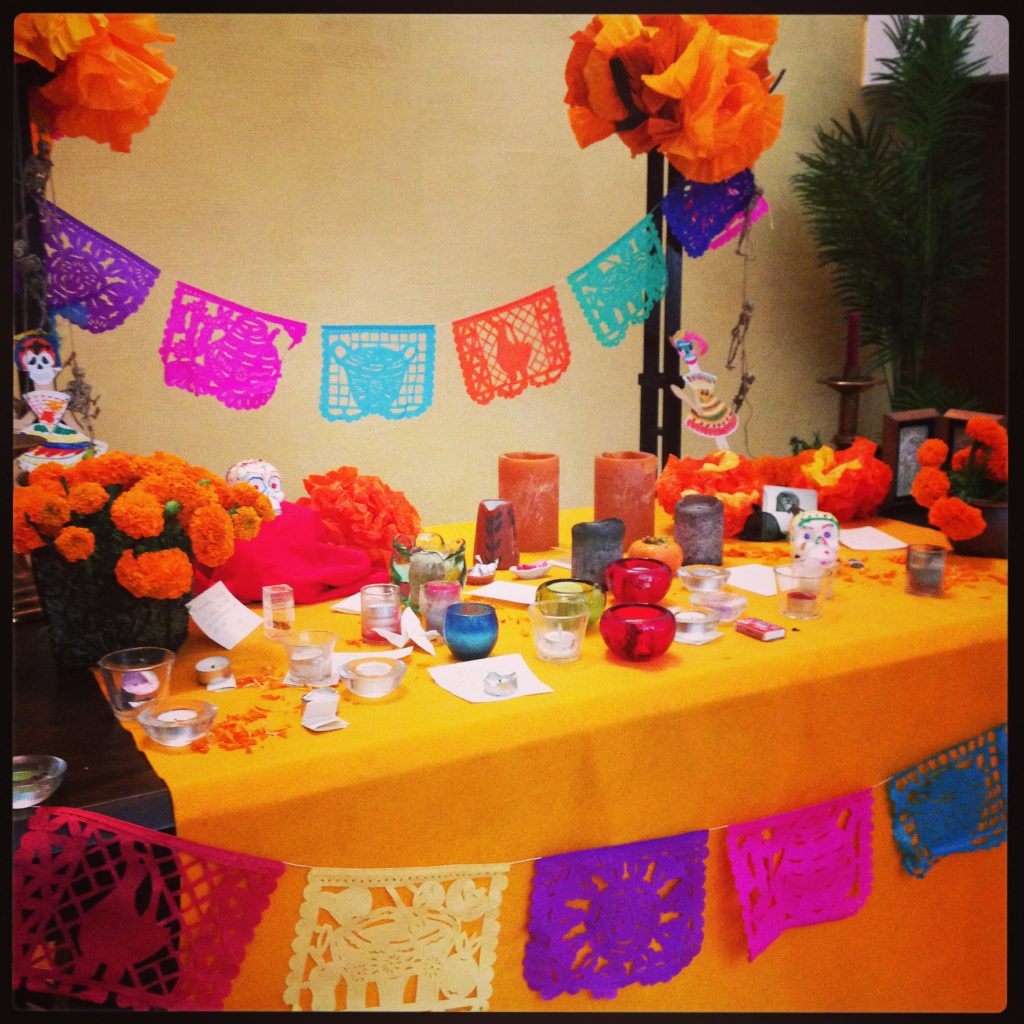
OfrendaI feel lucky since I had two opportunities to celebrate All Saint’s Day at our ofrenda in the sanctuary. Once was in the morning with the adults of the congregation. It was bright, sunny, and even fun, especially when I spent time with the youngest children who were irresistibly drawn to the candles on the table. I hope that with a few more repetitions the children will come to understand what we say in Godly Play about a candle which is blown out. The light isn’t “gone” — it’s “changed.” You don’t see it as a bright spot any more, but as the little bit of white smoke that spreads out and travels around the room. And where you might not have smelled it before, now you can. The same happens to a person’s spirit when they die. It can’t be found in one place any more, but spreads out and travels. And we cannot see that person in the same way anymore – but we can still sense them somehow, and know in a spiritual sense that they are still with us. We can remember this every time we see the light of a candle “change.”
For anyone who is grieving I would pray for a sense of this continuity, a mystical awareness of “change” rather than “ending” — but I also know, sometimes it just doesn’t feel that way. Sometimes our sense of loss is overpowering, and the crushing weight of absence shouts down the small whisper of presence.

We revisited the ofrenda that evening in Youth Group, as part of a silent prayer practice spanning the sanctuary and a walking labyrinth which we had chalked out in the courtyard. The ofrenda which had been so bright in the morning was muted in the candlelight, and the hopeful sounds of Angel Band and Will the Circle Be Unbroken which we had sung in the morning were replaced by a thick and solemn silence. Some of the youth group members have been through enormous loss in the past few years. Even those who have never tasted the bitterness of grief know that it is all too close and real for their friends in the group. So our time at the ofrenda that evening felt different than it had in the morning.

Grief goes through different seasons and times like this; sometimes bright and sharp, sometimes dark and dull, sometimes filled with gratitude, sometimes overpoweringly sad. Many of these different varieties of grief are not easily accommodated for in our public or private lives. It seems like our culture often expects us to be in distress for a week or two following a death, followed by a couple of months of general sadness, and then it’s back to normal. But our spirits are profoundly touched and affected by grief and loss. My prayer for us is that we may have a wider acceptance and compassion for the different ways we grieve.

If you are grieving in any way – whether due to a loved one’s death or other circumstances in your life – and would like to share a time of meditation and prayer with others during your grief, you are welcome to join a Grief and Spirituality group. It will be meeting on Nov. 10th (Monday) at 3 PM in the office.

Every Blessing,
Talitha


Report back from the retreat

Friday, October 31st, 2014

View just this post

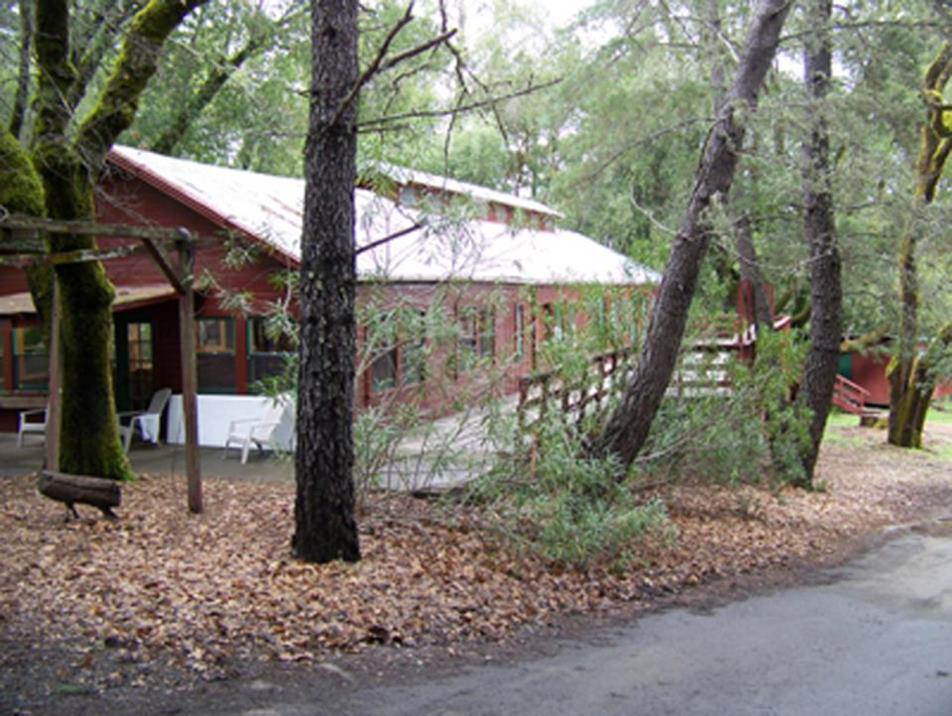
Friday through Sunday was a whirlwind of activity with the youth on our annual Fall Retreat at Cazadero. Four amazing advisors joined me to lead it, and each of us had borrowed or rented a minivan to drive up, chock-full of teenagers, music, and excitement.

The retreat was scary. From the drive up in the dark, with the teen girls in my van anxiously scanning the sides of the road for skunks, possums, wild boars, and Bigfoot… to the creepy and mysterious Story of Cazadero and the moment during our storytelling when a wind suddenly blew the front door wide open. Being in the woods in the wind, the rain, and the dark is scary enough itself. But we also did deliberate activities to focus in on our courage and strength together. For example, we had a ropes course in the morning which took us on tight-wires and through huge rope spider webs. Even a girl with a broken foot powered through bravely. And then on Saturday night, we did a simulation game which I had modified from the UN High Commission for Refugees’ game Passages. In it, we posited a 2050 future where the US was unstable and violent, but Mexico was safe and stable. The youth were broken up into families and tasked with trying to escape and make a new life in Mexico. Through limited resources, dangers all around, and a fair share of rapid-fire Spanish yelled at them in the dark by our “border guards” in the process of arresting and detaining them, they experienced a lot of fear – and, on the flip side, we also saw a lot of courage. In debriefing the game we found that not only was it a powerful tool to incite compassion for refugees, but it changed their perspectives on their own lives as well. A cracked i-Phone screen suddenly doesn’t seem like a big deal, and the ability to use one’s own language is something to be grateful for on a daily basis.

There is so much more I could talk about – from the delicious homemade food to the long hours of singing together – but this newsletter needs to go to press, and so I’ll leave you to check out our photos on Flickr. May we all be as brave as these great youth.

Every Blessing,
Talitha


Remembrance Sunday

Friday, October 31st, 2014

View just this post

This coming Sunday is Remembrance Sunday, an informal Presbyterian holy day observed on the first Sunday in November, because that is the Lord’s Day closest to the days (November 1st and 2nd) when our Roman Catholic sisters and brothers observe All Saints Day and All Souls Day/Día de los Muertos.

Traditionally, Presbyterians and other Protestants have chosen not to pay any attention to Roman Catholic holidays (in fact, early Calvinists didn’t even observe Christmas because it felt too popish), but in recent years, a lot of us have revisited the practice of setting aside a Sunday to remember in worship our loved ones who have passed from us and have now joined the Church Triumphant.

I have found Remembrance Sunday to be a wonderful experience, as it invites me to give thanks for the lives of my dear ones who are no longer living, and it gives me a way, formally, to express gratitude for those I did not know, but whose lives touched me and formed me nonetheless.

I also love Remembrance Sunday, because it creates space for tears. Americans seldom allow ourselves to cry in church. We don’t usually let down our guards and we don’t often express our sorrow. This is too bad, because if ever there was a place in which to lament and mourn, it should be church, where the love of God is manifested in a beloved community.

***

Now, we also are going to dedicate our solar panels in Celebration on Sunday. This may, at first, seem inconsistent with the work of Remembrance Sunday, but consider this: those of us alive and active in the church today, will, with time, be among the saints commemorated on Remembrance Sunday. As we dedicate our solar panels, we will do so with the understanding that when we take action to protect the earth we do so as a gift to those who someday will remember us. This is true for all of the great earth-care work at MPC—our vegetable garden that bears witness to the health of the earth, our commitment to recycling and to collecting rainwater, our transition to efficient lighting, our use of washable dishes, our composting and so much more—it is an offering of love to future generations. And future generations will remember us for the good work we do.


Leading Youth Group – In Pictures

Friday, October 24th, 2014

View just this post

A pictoral essay on all the various directions I’m going
Talitha 1
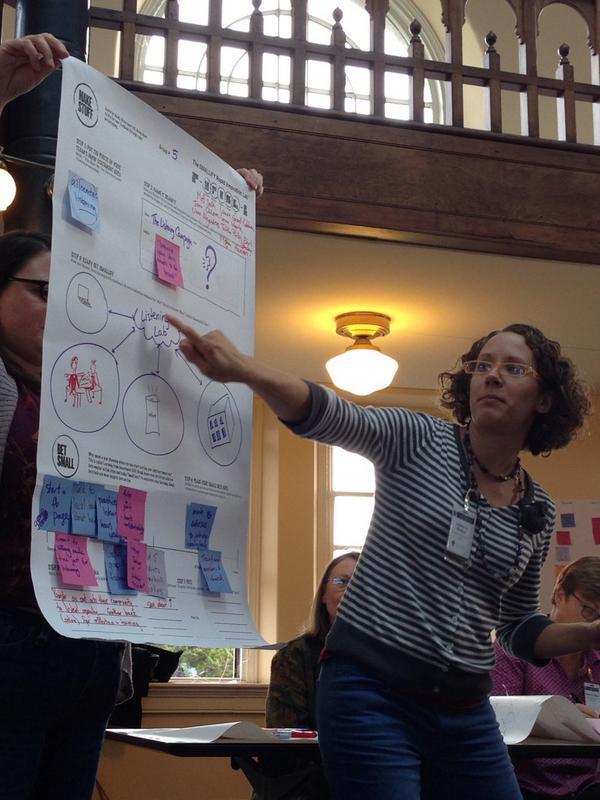
Thursday, Oct 16th: I attended a great conference at San Francisco Theological Seminary, focusing on games and innovation in ministry. In an “innovation lab” my group developed and pitched an idea for “The Listening Campaign,” with the tagline: Because your story needs to be heard. This has inspired me to spend more time doing one-on-one visits with youth in our group and in the neighborhood. I will probably set up some coffeehouse “office hours” to make space and time for it. Exciting!

Talitha 2

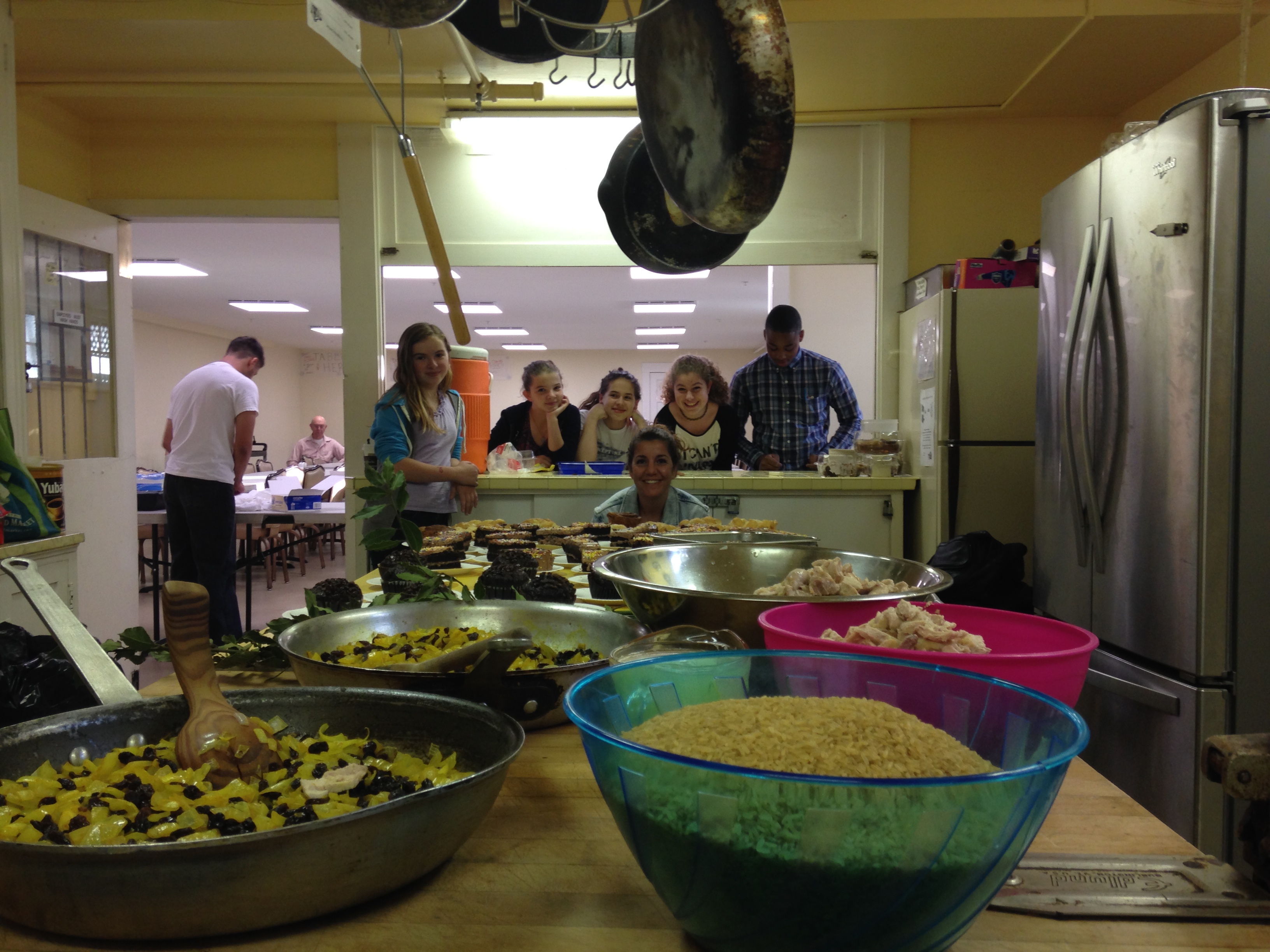
Friday, Oct 17th: Several members of Youth Group, directed by HAWG (Hunger Action Working Group) members, served dinner at College Avenue Presbyterian Church to a large crowd who were greatly appreciative. Big thanks to Bonnie Hamlin, Susanne Lea, Janet Mulshine, and Debbie Fallehy.

Talitha 3

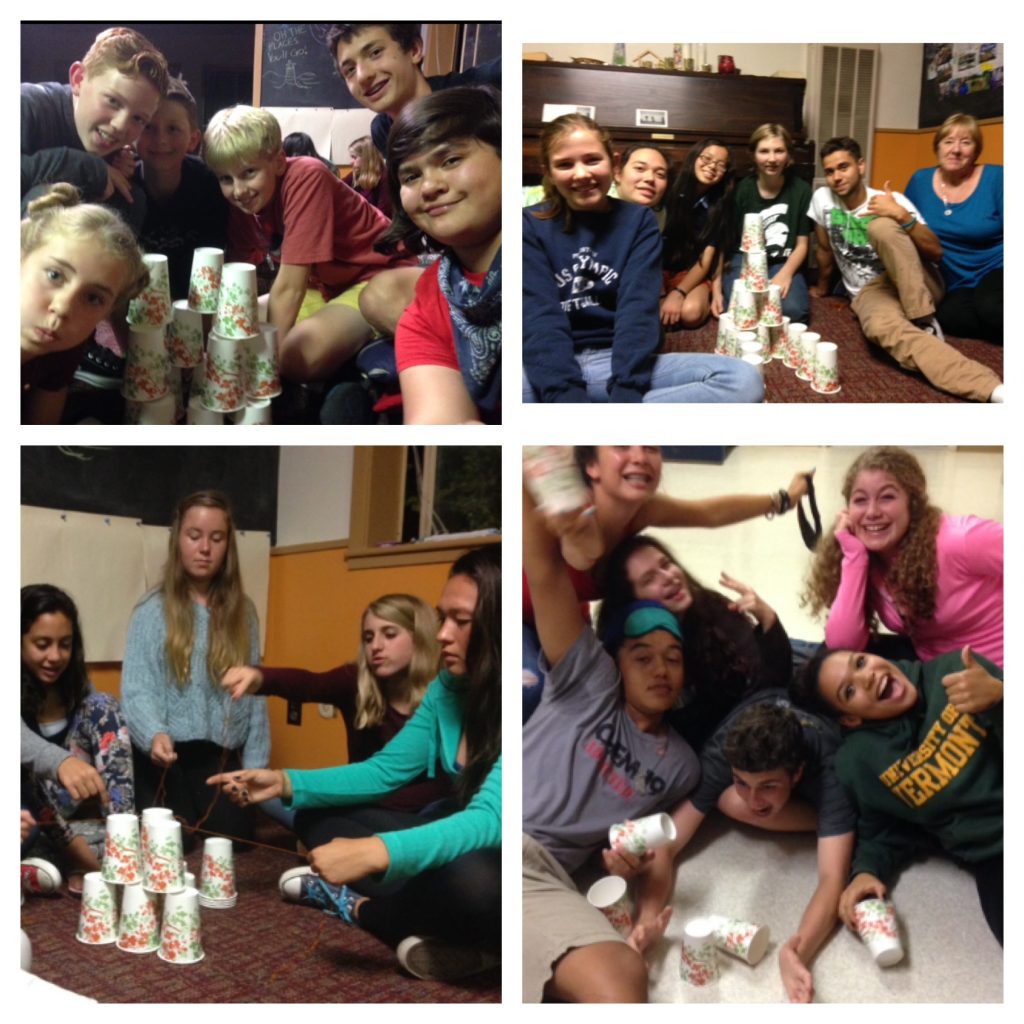
Sunday, Oct 19th: with 29 youth in attendance we had a great youth group meeting. At the innovation conference I had been introduced to several new games, and this was one: build a castle out of cups, without ever touching them with your hands. Rubber bands and string to the rescue. Each group had a different approach… who played this game best?

Talitha 4

Upcoming: Retreat at Camp Cazadero. 26 youth and 5 adults will be present, 12 of whom will be on their first EVER retreat at Caz. We will play a lot of games designed to transform us into super-empowered, hopeful, & empathetic people. Pray for us!


Reformation

Friday, October 24th, 2014

View just this post

Dear Friends,

Because this coming Halloween will mark the 497th anniversary of the day Martin Luther posted a long list of complaints about the Roman Catholic to the door of his church in Wittenberg, Germany, in Celebration on Sunday October 26th, we will be observing Reformation Sunday. This is not, perhaps, one of the most famous or prominent festivals on the Church calendar, but it feels important to me because Martin Luther—and those who followed in his footsteps—changed not the just the Church but all of Western Civilization in ways that I think are important.

In many ways the Reformation was the theological and ecclesiastical expression of Humanism, an intellectual and cultural movement born of the Renaissance. Humanists believed humans were capable of doing great things. They rediscovered the work of Greek philosophers, engaged in the work of science, and created amazing works of art. As an expression of humanism Protestantism embraced science and allowed itself to be informed by learning of every kind. We haven’t always allowed that spirit to abide in us, but at our best we have been great learners.

Politically, the Reformation helped mold modern democracy by rejecting the power of the Pope, by questioning the divine right of monarchs, and by believing ordinary humans are capable of making decisions and shaping society.

So three cheers for the Reformation. Be sure to show up on Sunday to help celebrate the great tradition in which we stand. We’ll sing great Reformation hymns and we’ll recommit ourselves to embracing the best in our tradition.

See You Sunday!

Ben


Bewitched!

Tuesday, October 21st, 2014

View just this post

Bewitched Poster3 pm on Sunday, November 2nd will be the start of an afternoon of enchantment, temptation, and general treachery, that is, as long as you join us for Bewitched, a fundraising concert at MPC featuring music from a wide spectrum of musical genres.  Patrice Kirkish and Anne Daniel will be sharing selections from the operas Carmen by Bizet, The Magic Flute by Mozart, Norma by Bellini, Jeanne d’Arc by Tchaikovsky, and Midsummer Night’s Dream by Britten.  You also will be treated to a delightful art song duet by Brahms.  Our own Talitha Phillips will present an old Irish poem in a traditional English ballad setting, while guest artists from the Pacific Boychoir Academy coached by our organist, Marcia Roy will sing some old standards and a few choral pieces. Marcia and Kim Rankin will provide beautiful accompaniment and the program will be hosted by Bud Sisson, adding his lovely speaking voice as he sets the scene for each song. And be on the lookout for more MPCers, masquerading as fairies, princes, sprites, and the like.

After the concert, the fun will continue with a reception in the family room featuring sparkling, white and red wines and a magical fountain of chocolate!

All monies collected through attendees’ generous donations will benefit MPC—so please invite your friends and family. Suggested donation of $20 for the concert, plus an additional $5 if you’d like to join us for a glass of wine or two.

Interested in helping out at the event? We’d love to have you; please contact Carrie McKiernan at carriemckiernan@gmail.com.

This is sure to be a great event – bring a friend or two, and let’s pack the place!


Our Neighbors

Friday, October 17th, 2014

View just this post

As many of you know, the MPC session voted in September to explore ways our congregation might come alongside and offer assistance to the Ordoñez family who, last summer, escaped extreme violence in Honduras. So far our assistance, for the most part, has been to help them navigate the vague and obscure ins and outs of the US legal system. Currently the Ordoñez family has legal status—they are not facing immediate deportation and won’t face deportation until their legal case has run its course. However, if the United States government refuses to give the Ordoñez family asylum, our congregation may need to talk about offering them sanctuary.

On Tuesday evening I attended an event at which I spoke publically about our congregations’ relationship with the Ordoñez family, about our help so far and about the possibility of providing sanctuary, should the need arise. Here is the text of the short speech I gave, on why a congregation should be prepared to provide sanctuary for those fleeing violence in Central America.

***

If you were to ask me why a congregation should be prepared to provide sanctuary for a family that has come to the United States to avoid extreme violence in Central America, I’d answer that question by asking you a question in return: what if it was one of your neighbors?

What if one of your neighbors owned a small business and lived in a city where organized crime, with the cooperation of law enforcement extorted large sums of money from business owners?

What if one of your neighbors suffered beyond anything you can imagine, because he or she tried to avoid participating in the extortion?

What if, in order to provide safety for his or her family, one of your neighbors had to travel great distances by bus, across several international borders?

What if, for the crime of attempting to provide a safe place for a family, one of your neighbors was thrown in jail and faced deportation back to the place of violence from which he or she was fleeing?

What if you knew that your own country’s foreign policies were largely responsible for creating the conditions that fostered the violence that caused hardship for your neighbors?

If one of your neighbors had to face the kind of hardship I just described to you, I’m guessing you’d offer to help in any way possible, because neighborliness is something we value.

Well, here’s the thing: if we use a Biblical and historically Christian understanding of what it means to be neighbor, then you need to know that all the awful things I’ve described have happened and are happening to your neighbors. Some of these neighbors live here in the East Bay, some of them still live in Honduras and Guatemala and El Salvador, but your neighbors—our neighbors—really need our help, and what kind of Christians would we be if we didn’t lend a hand, if we didn’t offer support, if we didn’t provide sanctuary?

If we use a Biblical and historically Christian understanding of what it means to be neighbor, then the question shouldn’t be why my congregation might—if asked—be willing to offer sanctuary—the question is why your congregation is not offering sanctuary.

Friends, our neighbors need our support. Let’s see what we can do to help.

Ben